

6 Simple Ways to Reduce Toxins in Your Home Naturally
Want to reduce toxins in your home naturally? Creating a healthier living space doesn’t have to be expensive or complicated. Everyday cleaning products, household dust, and poor ventilation can affect indoor air quality. Fortunately, a few simple changes can help reduce your exposure to unwanted pollutants and create a cleaner, fresher home for your family.
Affiliate Disclosure: This post contains affiliate links. I may earn a small commission from qualifying purchases at no additional cost to you. As an Amazon Associate, I earn from qualifying purchases.
1. Let the Fresh Air Flow
Fresh air can help improve the air quality inside your home. When outdoor conditions are good, open a few windows to increase ventilation.
Proper ventilation helps reduce the buildup of certain indoor pollutants. It can also help remove unwanted odors and excess moisture.
Easy Ways to Improve Indoor Air Quality
- Open windows on opposite sides of your home to encourage airflow.
- Use bathroom exhaust fans during and after showers.
- Turn on your kitchen exhaust fan when cooking.
- Replace HVAC filters according to the manufacturer’s recommendations.
- Keep air vents clean and free from obstructions.
However, avoid opening windows when outdoor air quality is poor. High pollen levels and excessive humidity can also make indoor conditions worse.
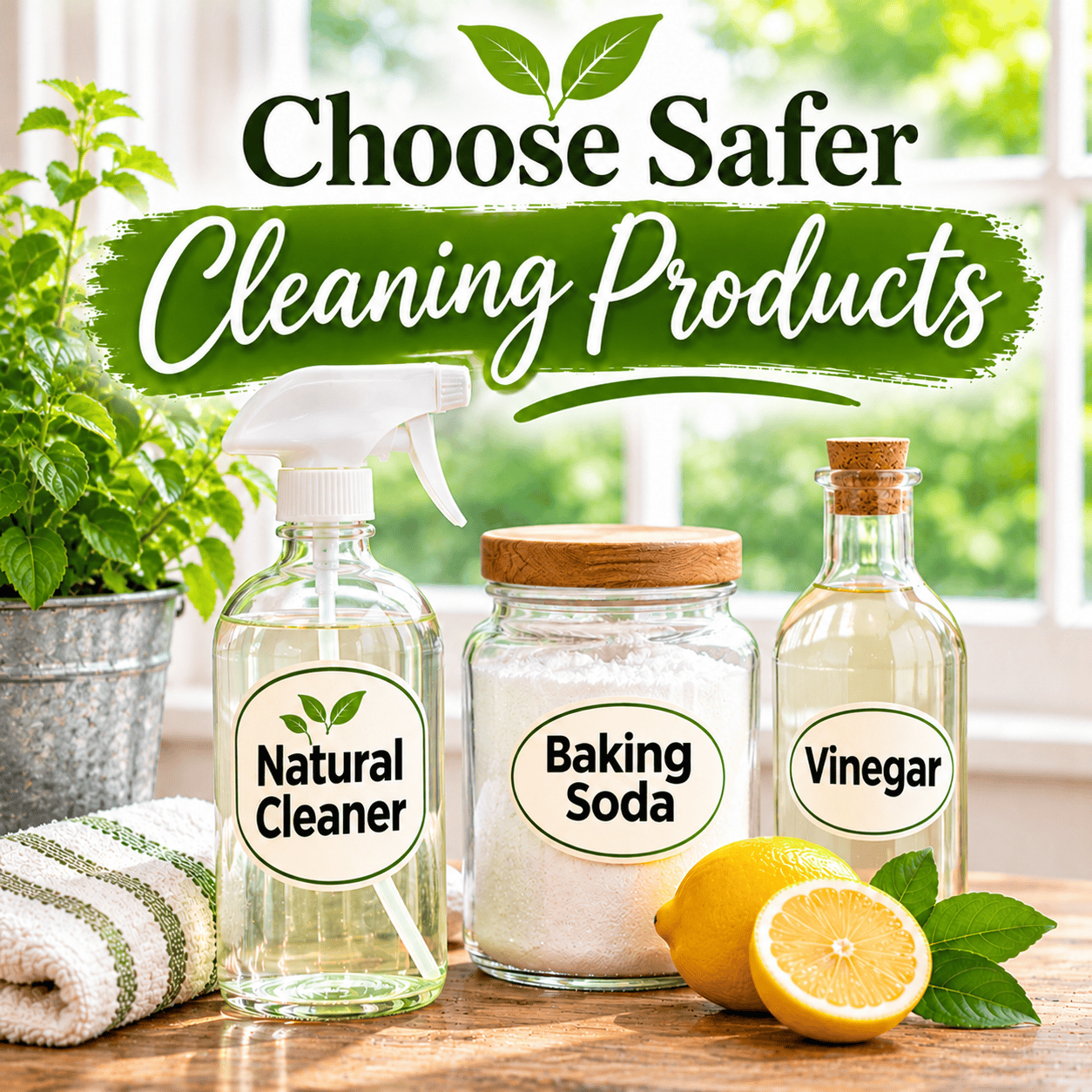
2. Choose Safer Cleaning Products to Reduce Toxins
Have you ever looked at the ingredients in your everyday cleaning products?
Some household cleaners contain fragrances and chemicals that may irritate your skin, eyes, or respiratory system. Fortunately, there are gentler cleaning options available.
One simple way to reduce unnecessary exposure is to choose fragrance-free products with clearly listed ingredients. Choosing gentler cleaning products is one practical way to reduce toxins in your
home naturally. Start by replacing heavily fragranced cleaners with simpler, fragrance-free alternatives.
Natural Cleaning Ingredients You Can Try
Many everyday cleaning tasks can be handled with ingredients you already have at home.
- Baking soda: Great for gentle scrubbing and deodorizing.
- White vinegar: Helps remove mineral deposits and soap residue from suitable surfaces.
- Lemon juice: Useful for certain light cleaning tasks.
- Mild dish soap: Removes everyday grease, dirt, and grime.
- Microfiber cloths: Trap dust and clean many surfaces with just water.
However, natural ingredients aren’t always safe for every surface. For example, vinegar and lemon juice can damage natural stone.
Never mix bleach with vinegar, ammonia, or other cleaning chemicals. Also, remember that homemade cleaners don’t replace disinfectants when disinfection is necessary.
3. Reduce Toxins by Rethinking Home Fragrances
There’s something wonderful about walking into a fresh, clean home. However, a clean home doesn’t need to smell like perfume.
Many air fresheners, scented candles, and fragrance products release compounds into the air. Some may irritate people with allergies or respiratory sensitivities.
Essential oils are another popular option. However, they’re concentrated substances and should be used carefully. If you want to reduce toxins in your home naturally, pay attention to the fragrances you use. Removing the source of unwanted odors is often better than covering them with scented products.
Keep Your Home Smelling Fresh Naturally
Instead of covering unwanted odors with fragrances, try removing the source first.
- Empty kitchen trash regularly.
- Wash bedding and blankets frequently.
- Clean sink drains and garbage disposals as needed.
- Vacuum carpets, rugs, and upholstery.
- Improve ventilation throughout your home.
If you enjoy using essential oils, use them sparingly. Also, consider the safety of children, pets, and anyone with asthma.
Ultimately, a naturally fresh home starts with good cleaning habits rather than added fragrances.

4. Keep Your Home Smoke-Free
Keeping tobacco smoke out of your home is one of the most important ways to improve indoor air quality.
Secondhand smoke contains harmful chemicals. Exposure increases the risk of heart disease, lung cancer, and respiratory problems.
Children are especially vulnerable. Secondhand smoke can increase their risk of asthma attacks, respiratory infections, and ear infections.
Protect Your Family From Secondhand Smoke
If someone in your household smokes, encourage them to smoke outdoors. Choose an area away from doors, windows, and air intakes.
Smoke residue can also settle on furniture, walls, clothing, and other surfaces. This is commonly called thirdhand smoke.
Unfortunately, opening windows or using air purifiers cannot eliminate the risks of indoor smoking.
For more information, visit the American Cancer Society’s guide to secondhand smoke.
5. Reduce Toxins by Controlling Mold and Moisture
Mold thrives in damp environments. Therefore, bathrooms, kitchens, laundry rooms, and basements are common problem areas.
Excess moisture can cause musty odors, damage household materials, and encourage mold growth.
For some people, mold exposure can trigger allergy symptoms or worsen asthma and other respiratory conditions.
Controlling moisture is another important way to reduce toxins in your home naturally. Keeping damp areas dry helps prevent mold growth and supports better indoor air quality.
Simple Ways to Prevent Mold Growth
- Repair leaking pipes and faucets promptly.
- Use bathroom exhaust fans during and after showers.
- Keep indoor humidity below 60%, ideally between 30% and 50%.
- Dry wet surfaces and materials as quickly as possible.
- Inspect sinks, windows, and appliances for moisture problems.
- Clean small mold patches on suitable hard surfaces using appropriate safety precautions.
If mold keeps returning, look for the source of moisture. Simply wiping away visible mold won’t solve an ongoing leak or humidity problem.
When to Call a Professional
Large mold problems may require professional remediation. The same applies when mold grows inside walls or other hidden areas.
According to the Environmental Protection Agency, controlling moisture is the key to preventing mold growth.

6. Choose Glass Containers for Food Storage
Another easy household swap is using glass containers for food storage.
Glass containers are durable, reusable, and easy to clean. They also resist stains and food odors better than many plastic containers.
Some chemicals can migrate from certain plastics into food. The amount depends on the material, temperature, and how the container is used.
Safer Food Storage Habits
- Use microwave-safe glass containers when reheating leftovers.
- Avoid heating plastic unless it’s labeled microwave-safe.
- Replace cracked, damaged, or heavily scratched plastic containers with glass alternatives.
- Store leftovers in clean, airtight containers to maintain freshness.
- Choose reusable glass food storage containers whenever possible.
You don’t need to replace every plastic container overnight. Instead, start with the ones you use most often for reheating food.
Looking to make the switch to glass food storage? Browse glass food storage containers with bamboo lids on Amazon to find the sizes and styles that best fit your kitchen and storage needs.
Final Thoughts: Simple Ways to Reduce Toxins in Your Home Naturally
Learning how to reduce toxins in your home naturally doesn’t mean replacing everything you own. Instead, focus on simple, practical changes that fit your lifestyle.
Start by improving ventilation and choosing gentler cleaning products. Then, pay attention to excess moisture, household fragrances, and food storage habits.
Over time, these small changes can help create a cleaner, fresher, and more comfortable living space.
Remember, a healthy home isn’t about perfection. It’s about making thoughtful choices for yourself and your family.
Want to make more of your own household cleaning products? Check out my Homemade Laundry Powder Recipe for an easy, budget-friendly DIY laundry option.
Happy cleaning, friends!
I love all of these tips! I recently started using green cleaning products and love them! Thanks for sharing!
You’re so welcome Krissy, I love cleaning with my green cleaning products! They leave my home feeling fresh and inviting while creating a cleaner, healthier environment without the use of harsh chemicals.