DO YOU USE COMMERCIAL CLEANERS OR SAFE ECO-FRIENDLY PRODUCTS TO CLEAN YOUR HOME?
When it comes to cleaning your home, do you prefer conventional store-bought cleaners or eco-friendly cleaning products? It’s a question worth asking, especially when you’re trying to keep your home clean while being mindful of the products you use around your family and pets.
Cleaning supplies are something most of us regularly add to our shopping lists. But with so many products claiming to be natural, plant-based, non-toxic, or environmentally friendly, how do you know which ones are actually worth purchasing?
The good news is that you don’t have to replace every cleaning product in your home to make more thoughtful choices. Understanding ingredients, reading labels, and choosing the right cleaner for each job can make a difference.
What’s the Difference Between Eco-Friendly and Conventional Cleaning Products?
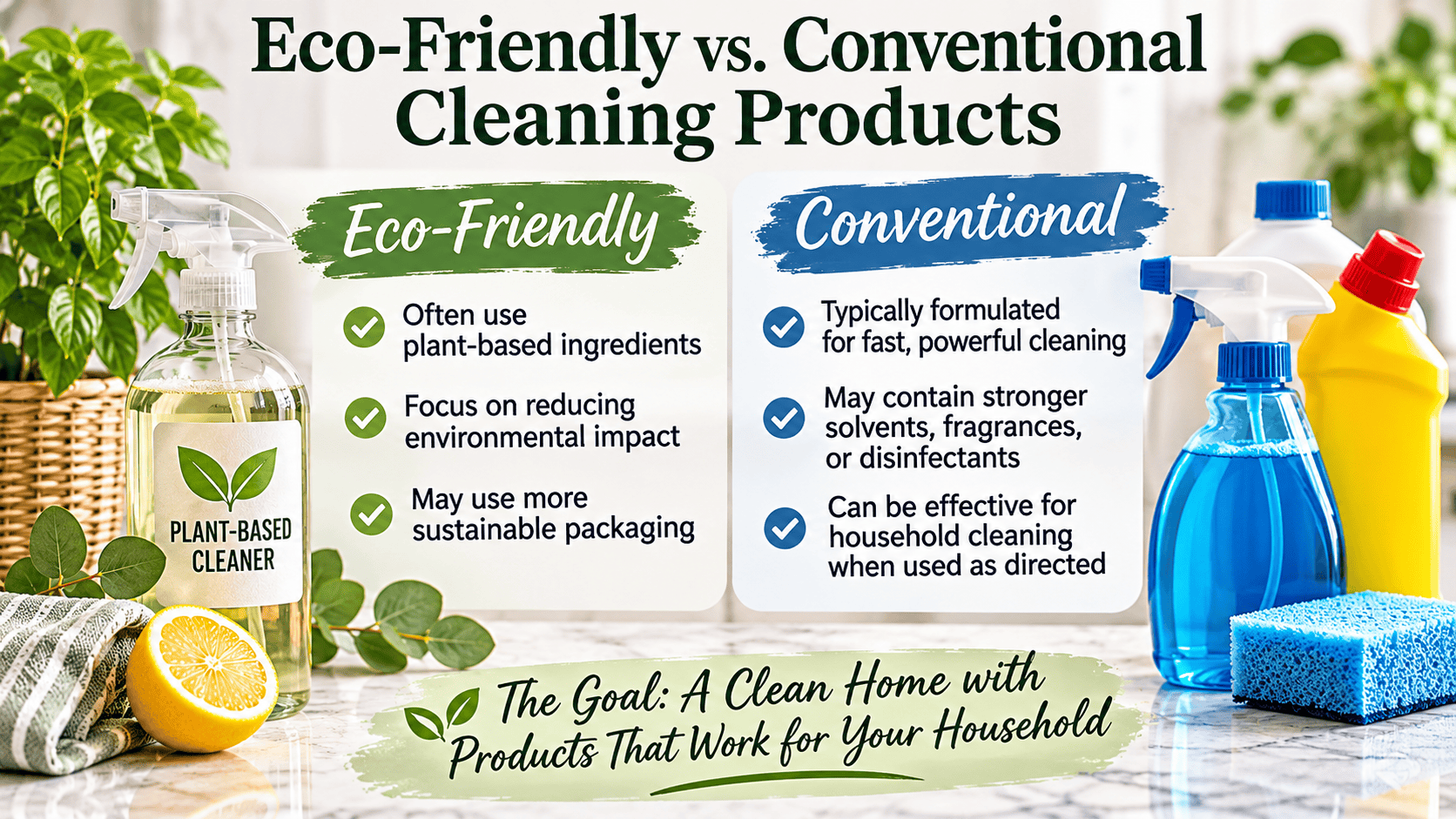
Conventional cleaning products are often formulated to remove grease, dirt, stains, and buildup quickly. Some contain stronger solvents, fragrances, disinfectants, or other ingredients that may require additional precautions.
Eco-friendly cleaning products generally focus on reducing certain environmental impacts through ingredient selection, packaging, or manufacturing practices.
However, there’s something important to understand: Just because a cleaning product is labeled natural or plant-based doesn’t automatically mean it’s safer.
Even naturally derived ingredients can cause skin irritation, allergic reactions, or respiratory discomfort. And some conventional cleaners are perfectly appropriate for household use when used according to their labels.
The goal is to choose products that clean effectively while considering your household’s needs.
Why I Prefer Eco-Friendly Cleaning Products
I’ve always been interested in finding cleaning products that work well without relying on unnecessarily strong fragrances or ingredients.
I enjoy making some of my own cleaning solutions, and I also purchase ready-made plant-based cleaners for everyday household cleaning.
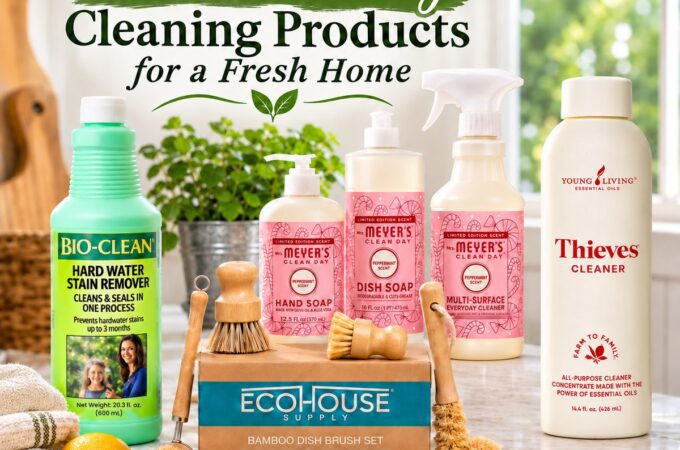
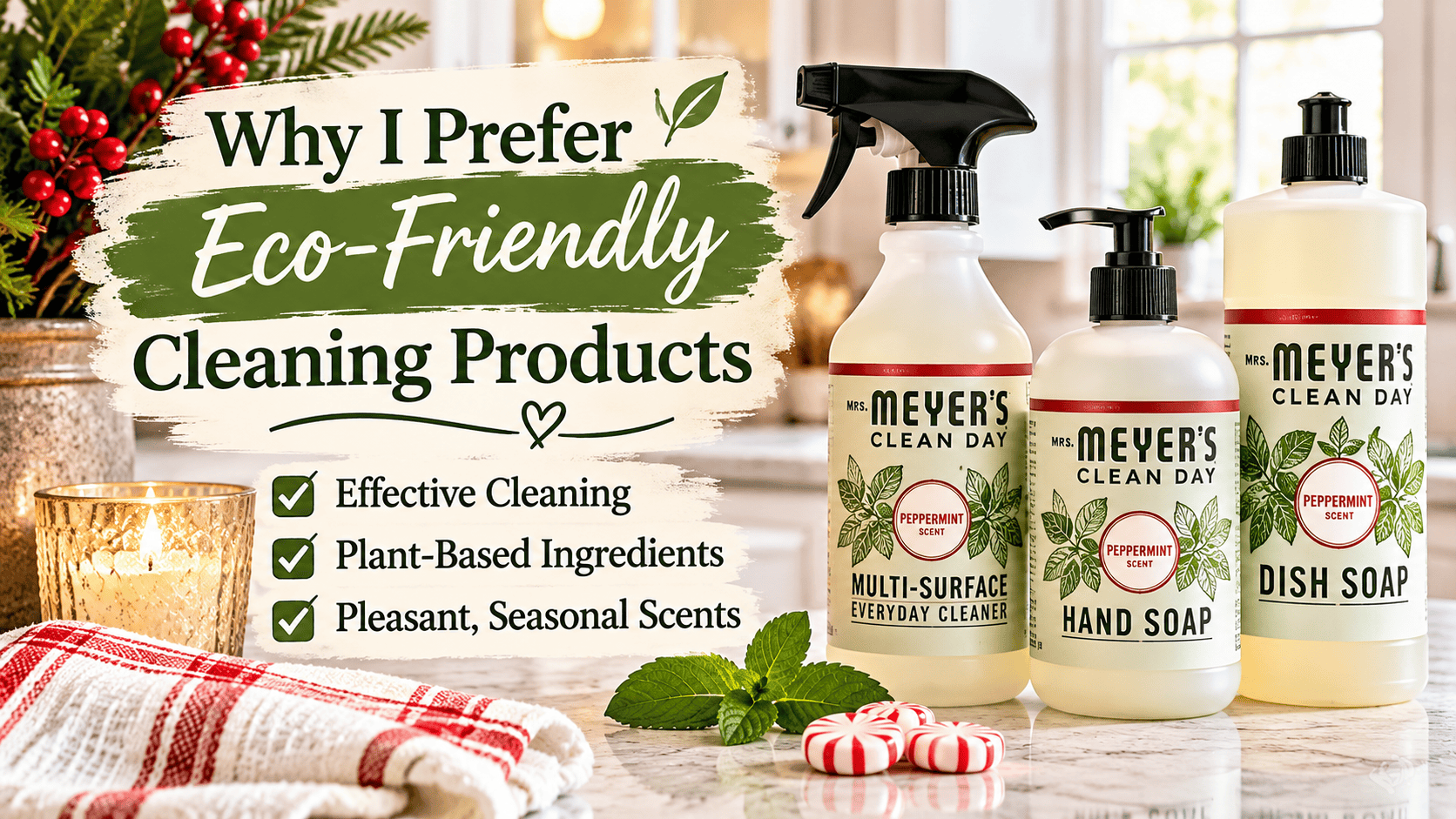
One brand I’ve enjoyed using is Mrs. Meyer’s Clean Day.
I especially like the seasonal peppermint fragrance around the holidays. There’s something about a freshly cleaned kitchen with a pleasant seasonal scent that makes the house feel welcoming.
Of course, fragrance preferences are personal. If you’re sensitive to scents, choosing fragrance-free products may be a better option.
Mrs. Meyer’s Clean Day: One of My Favorite Cleaning Brands
One product I’ve enjoyed using is Mrs. Meyer’s Multi-Surface Concentrate.
It’s convenient because a concentrated cleaner can be diluted according to the manufacturer’s directions and used for various everyday cleaning tasks.
Depending on the product label and surface compatibility, multi-surface cleaners may be useful for:
- Kitchen countertops
- Cabinet exteriors
- Certain sealed floors
- Sinks and other washable surfaces
- Everyday dirt, spills, and light grease
Always check the product’s instructions before using it on natural stone, unsealed wood, delicate finishes, or other sensitive surfaces.
I also appreciate having the option to purchase concentrates instead of repeatedly buying smaller bottles of ready-to-use cleaner.
A little reminder: Mrs. Meyer’s products are cleaning products, not necessarily disinfectants. If you need to disinfect a surface, choose an EPA-registered disinfectant appropriate for that job.
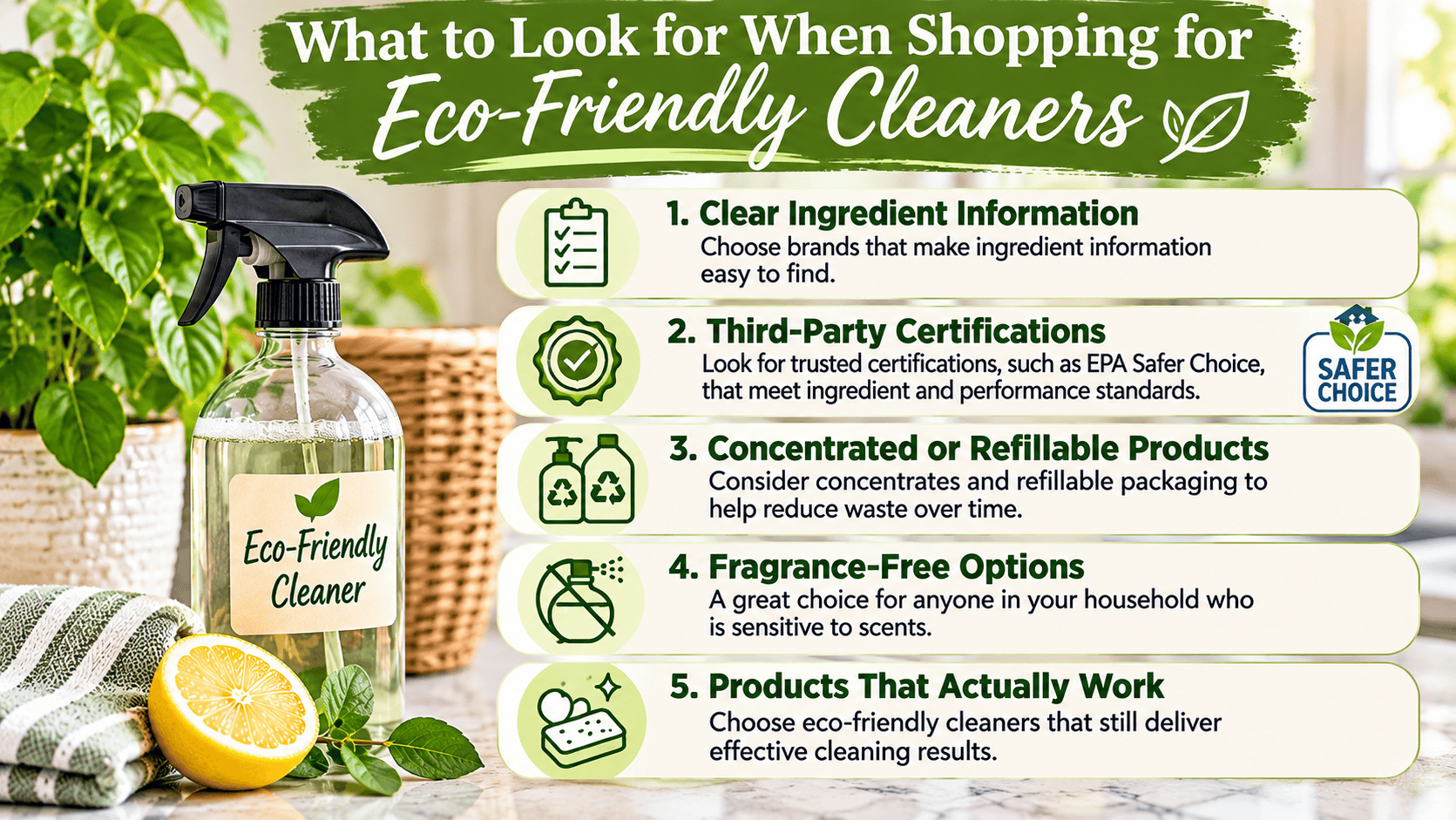
What to Look for When Shopping for Eco-Friendly Cleaners
Instead of choosing a product based only on the words green, natural, or non-toxic, take a closer look at what you’re purchasing.
1. Clear Ingredient Information
Look for brands that make ingredient information easy to find. This can help you identify fragrances or other ingredients you may want to avoid.
2. Third-Party Certifications
Certifications such as EPA Safer Choice can help identify products that meet specific ingredient and performance criteria.
3. Concentrated or Refillable Products
Concentrates and refillable packaging may reduce the amount of packaging you purchase over time, depending on how they’re manufactured and used.
4. Fragrance-Free Options
If anyone in your household is sensitive to fragrances, fragrance-free products may be a better choice than heavily scented cleaners.
5. Products That Actually Work
A cleaner should still do the job it’s intended to do. Choosing a gentler product doesn’t mean you should have to spend twice as long scrubbing.
Looking for another way to incorporate eco-friendly cleaning products into your routine? Check out my Homemade Natural Dishwasher Detergent recipe for a simple DIY cleaning alternative.
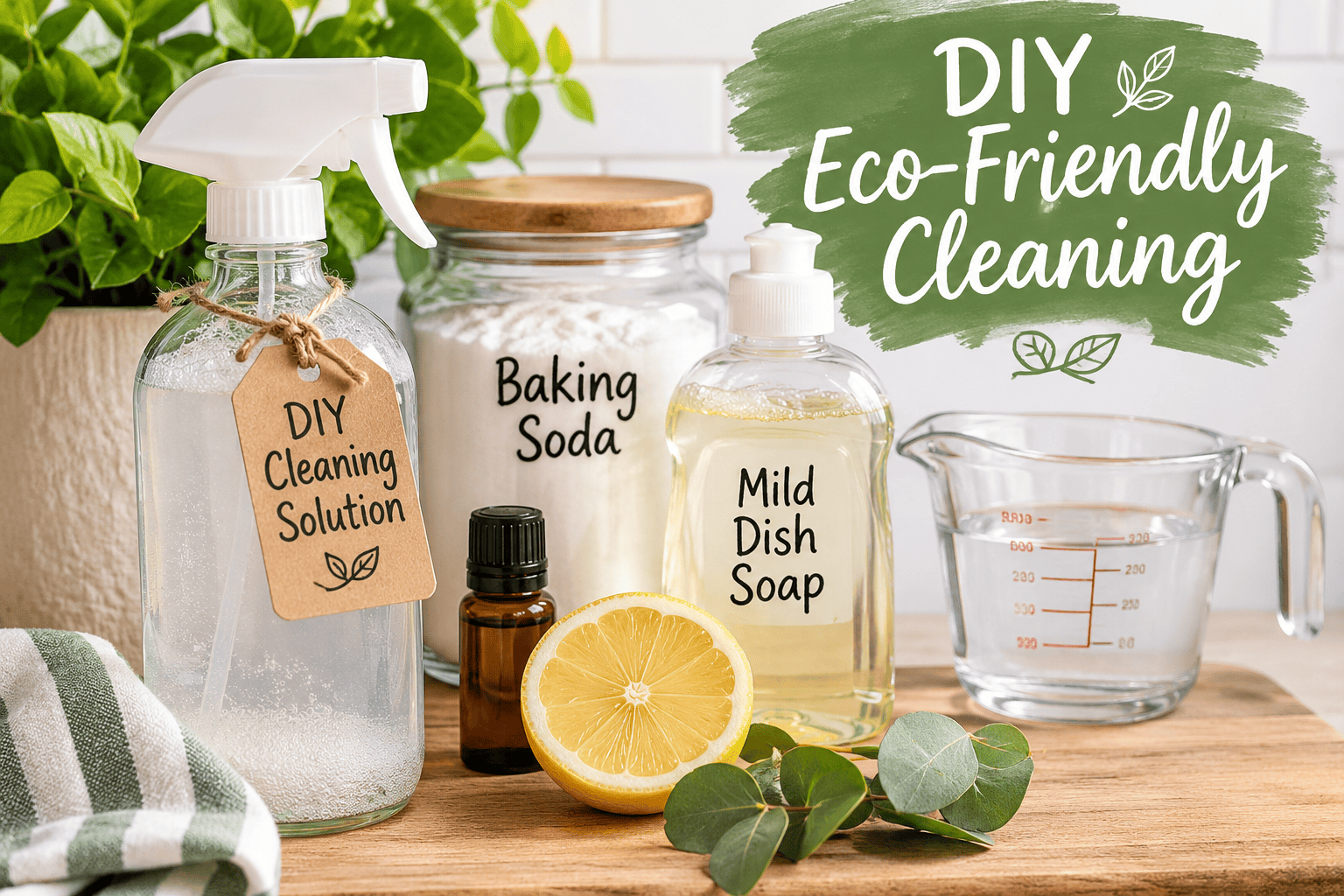
Can You Make Your Own Eco-Friendly Cleaning Products?
Absolutely! Homemade cleaning solutions can be useful for certain everyday cleaning tasks.
Simple ingredients such as baking soda, mild dish soap, and water can help with some household cleaning jobs.
However, homemade cleaners aren’t appropriate for every surface or situation, and they shouldn’t be relied on for disinfecting unless their effectiveness has been established.
Cleaning safety tip: Never mix bleach with vinegar, ammonia, or other cleaning chemicals. Also, avoid using acidic cleaners such as vinegar on marble, limestone, and other acid-sensitive stone surfaces.
Essential oils may add fragrance, but they don’t automatically make a cleaning solution safer or more effective. Some essential oils can also be harmful to pets.
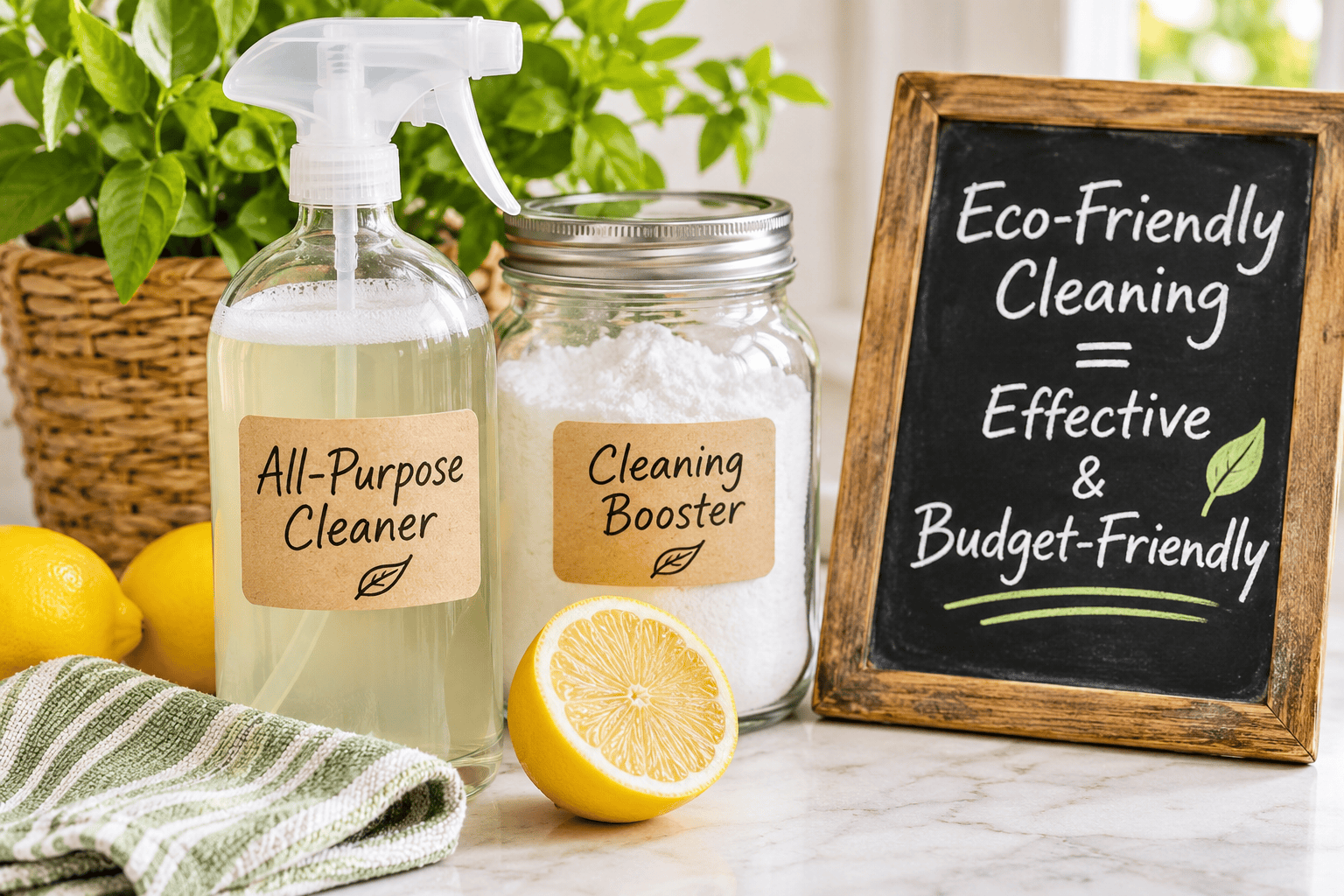
Do Eco-Friendly Cleaning Products Cost More?
Not necessarily.
Although some environmentally focused cleaning brands have higher upfront prices, concentrated products can sometimes be economical because you dilute them before use.
To compare prices fairly, look at the cost per ready-to-use ounce rather than simply comparing bottle prices.
You may also save money by purchasing fewer specialty cleaners and choosing a dependable multipurpose product suitable for several surfaces.
My Final Thoughts on Eco-Friendly Cleaning Products
You don’t need a cabinet full of expensive cleaning products to keep your home clean, fresh, and inviting.
Whether you prefer conventional cleaners, plant-based products, or a combination of both, what matters most is understanding the products you’re using and choosing the right cleaner for each job.
Personally, I enjoy using eco-friendly cleaning products in my everyday routine, especially versatile concentrates and multipurpose cleaners that make cleaning easier without breaking the bank.
That said, I also believe in being practical. Some cleaning situations call for specialized products, and there’s nothing wrong with using them when necessary, as long as they’re used safely and according to the manufacturer’s directions.
At the end of the day, a clean home isn’t about having the most expensive products. It’s about finding what works best for your home, your family, and your budget.